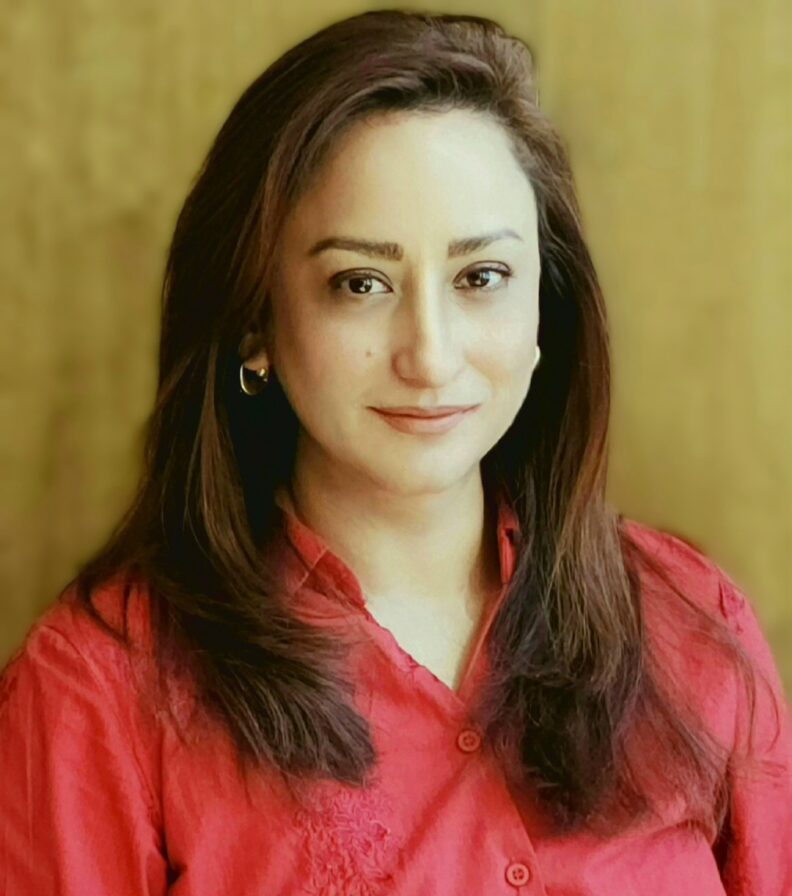
Fulbright Scholar, Maliha Shah, will graduate with a Ph.D from the Language, Literacy, and Technology program on May 9.
Originally from Pakistan, Washington State University wasn’t her first choice after earning a Fulbright scholarship. Shah wanted to choose an East Coast school but ultimately chose WSU because it aligned with her academic goals.
Shah was asked several questions about her time here. Some answers have been condensed for length and clarity.
Why did you choose WSU?
I was selected as a Fulbright Scholar, after which I was invited to list four universities of my choice. To be candid, Washington State University was not initially among them, not because it lacked merit, but because my search was largely confined to institutions on the East Coast.
During this period, I was in ongoing conversation with my Institute of International Education (IIE) advisor, as I struggled to find a program that fully aligned with my academic and professional goals. Each university I considered seemed to meet some, but not all, of my criteria. Recognizing this gap, my advisor recommended WSU’s Language, Literacy, and Technology (LLT) program. Upon exploring the program in depth, I realized it encompassed precisely the elements I had been seeking. It offered a compelling intersection of language learning, contemporary literacies, and technology as a vital mediator of education. Additionally, my review of faculty research revealed a strong emphasis on student engagement within the College of Education, Health, and Human Sciences (CESHS), which satisfied yet another of my criteria.
What is your area of study, and what drew you to this type of research?
My area of study is student engagement from an equity standpoint, based on the Universal Design for Learning (UDL) framework. Simply put, it means engagement is not a one-size-fits-all phenomenon and, therefore, engagement needs to be designed intentionally to accommodate student preferences across the spectrum. In my home country, student engagement resurged as a primary concern through the year-long schooling during the pandemic, particularly in contexts where technology-mediated education was not the norm before this unexpected shift in learning modality. As the manager of the English Curriculum, based in the head office of the largest private school network supporting 200 schools nationwide, I had insight into language instructors’ concerns regarding student engagement through sustained collaboration and instructional support.
Observable indicators of disengagement included irregular attendance, persistent camera deactivation during synchronous sessions, withdrawal when prompted to participate orally or engage in collaborative group work with unfamiliar peers, and frequent instances of students exiting classes prematurely. The situation was further exacerbated by declining student enrollment and increasing parental concerns regarding the payment of school fees in the absence of in-person instruction. Many parents struggled to reconcile the expectation of paying full tuition for online learning, which was perceived as a provisional arrangement that did not provide the same educational value as full-time, face-to-face schooling.
A system-wide study corroborated these observations, identifying reduced student engagement as the most frequently reported concern among instructors. Although the trend was consistent across disciplines and educational levels, it was more pronounced in language instruction. Among the four language strands—listening, speaking, reading, and writing—instructors most frequently reported lackluster student engagement in writing classes. Similarly, parental feedback in online parent-teacher meetings highlighted widespread perceptions of diminished student engagement in this new learning modality. Confronting these patterns of disengagement underscored the complexity of the phenomenon and necessitated a systematic and in-depth inquiry into the nature of student engagement and the factors that may influence it both positively and negatively. That is what brought me to WSU and provided the stimulus for my research with the intent of gaining insights into instructors’ pedagogical practices and strategic efforts to engage students by recognizing learner variability, through the UDL framework.
What has the Fulbright program meant to you?
For me, the Fulbright program represents far more than an academic opportunity. It is an invitation into a global community grounded in mutual respect, intellectual exchange, and the celebration of diversity. Within this space, diversity is not merely acknowledged; it is embraced as a vital strength that enriches learning and human connection.
As Fulbright Scholars, we arrive in the United States not only as students, but as cultural ambassadors. We carry with us the responsibility and the privilege of representing our home cultures while engaging in meaningful, reciprocal exchange. These experiences are both educational and deeply human, allowing us to grow while also creating opportunities for others to broaden their perspectives and understanding.
What stands out most, however, is the sense of belonging. Being part of the Fulbright community connects you to a vast and dynamic network of scholars across universities nationwide. This interconnectedness fosters unparalleled exposure to ideas, cultures, and collaborations that extend well beyond the classroom. Ultimately, being a Fulbright Scholar instills a lasting sense of confidence, purpose, and global awareness. The friendships formed, the perspectives gained, and the shared commitment to cross-cultural understanding make the experience not only enriching, but truly transformative
What do you like or dislike about campus?
What I appreciate most about the WSU Pullman campus is its calm, scenic setting and its strong sense of cohesion. The campus is highly walkable, which makes daily routines feel manageable and even enjoyable, especially in such a serene environment. It is also thoughtfully designed to be accessible to students with diverse needs, which contributes to a more inclusive academic space. The campus transit system is another major strength—it is reliable and efficient, making it much easier for students without personal vehicles to move between departments and other key locations.
I also value dedicated graduate spaces like the GPSA study lounge in the Terrell library, which provides a supportive environment and useful amenities for students deeply engaged in research.
That said, there are areas that could be improved. One limitation is the relative lack of intentionally designed outdoor social spaces, where students can hang out. While there are a few nearby cafés, the addition of more coffee shops with outdoor seating could enhance the campus experience. Parking can also be a challenge, particularly for those without long-term permits. Finding hourly parking, especially during events or peak times, can be challenging.
What was the most difficult cultural barrier or hardest custom to understand in the US?
One of the most noticeable cultural barriers for me was understanding the finer nuances of humor, steeped in references that feel natural to local students but unfamiliar to international ones. Even students with strong English language skills can struggle with culturally specific jokes, which can make social integration challenging on such occasions.
The difficulty isn’t about intelligence or comprehension; it is about exposure. Humor and cultural references often rely on shared background knowledge, and those nuances don’t always translate across cultures. This aspect stood out to me as a clear example of how something as simple as humor can become a meaningful cultural barrier, shaped by differences in context, exposure, and interpretation.
What impact do you think you made here at WSU?
I had the unique experience of being the first student from Pakistan ever in my department. In my first year, I was often asked whether I was from India or Bangladesh, which made me aware of how limited familiarity with Pakistan was in this context. While this initially stood out to me, I gradually came to see it as an opportunity. It allowed me to share perspectives and experiences that had not been represented before.
In my coursework, I often drew on examples from my professional experiences across different educational settings in Pakistan. I also participated in cultural events, where I was able to share aspects of my culture more informally. Over time, these interactions felt less like explanations and more like exchanges, where learning went both ways.
I was also able to take on a more active role in student advocacy through my involvement with the Graduate and Professional Student Association (GPSA). In that space, I worked to represent the interests of students in my program, including raising concerns that were relevant to Fulbright Scholars, who do not have dedicated representation. This experience added another dimension to my engagement with peers and the broader graduate community.
While it is difficult for me to define the exact impact of these efforts, I hope that my presence contributed in some way to broadening perspectives and fostering dialogue. At the same time, I feel grateful for the ways in which my peers and faculty engaged with and supported me. For instance, my committee chair nominated me for the Harriet B. Rigas Award. Over time, a few professors also asked if they could use my assignments and projects as exemplars for future students. I see this not just as a personal achievement, but as something shaped by the feedback, mentorship, and discussions that helped me improve my work along the way.
What is your fondest memory of your time here?
My fondest memories are the numerous trips I’ve taken with friends, where the journey itself often mattered more than the destination. We would travel together, stay in shared spaces, and explore new places with a sense of curiosity and excitement. Often, our plans would shift along the way, getting lost in unfamiliar streets, discovering hidden spots we hadn’t intended to find, and figuring things out together as we went.
Those moments were filled with simple but unforgettable joys: long walks where conversations flowed easily, bursts of laughter over the smallest things, and the shared experience of navigating challenges like finding directions or figuring out transportation. We tried new cuisines, turned ordinary meals into little adventures, and always made time to capture photographs that would later become treasured reminders of those days.
What made these trips so special was not just the places we visited, but the sense of togetherness, of building memories in real time, embracing unpredictability, and finding happiness in shared experiences.
Who was important to you during your time at WSU?
I share a very close relationship with my research advisor and committee chair, Dr. Deanna Day. Although she is based at the Vancouver campus, she has been consistently available, offering thoughtful guidance and steady support throughout my journey. Her mentorship has been an important anchor in my academic life.
At the same time, it is the communities I have become part of that have truly shaped my experience in Pullman and helped me build a sense of home away from home. The Fulbright community, in particular, has been foundational. They were among the first people I connected with when I arrived at WSU. Despite being a relatively small group in Pullman, Fulbrighters share a unique bond rooted in common experiences and transitions. There is a strong culture of mutual support, where advice, reassurance, and practical help are readily exchanged.
The community within the CESHS has been exceptional, defined not only by its academic strength but also by a culture of respect, openness, and genuine care—recognized even beyond the college. Faculty and leadership are approachable and student-centered. College leadership, including Dr. Karen Thomas-Brown and Dr. Tariq Akmal, along with Department of Teaching and Learning leadership, particularly Dr. Tom Salsbury, leverage their positions to cultivate an inclusive, secure, and supportive environment. Administrative support from the CESHS graduate office, especially Kelly McGovern and Kjelda Berg, has been invaluable in easing logistical challenges. Overall, CESHS leadership, staff, and faculty consistently demonstrate responsiveness and encouragement, while broader university offices, particularly the International Programs office, further reinforce this strong sense of support.
Equally important has been the support of my peers. Within CESHS, the Language, Literacy, and Technology group—particularly the five members of my cohort—has been a steady source of encouragement as we grew together throughout the program. I have been fortunate to learn alongside them; they fostered a collaborative and uplifting environment that has left a lasting impact. It is through the presence of such individuals that a space becomes truly conducive to learning and growth. Beyond this, the wider circle of friends I have built over time—some from my program and others from different disciplines—has also been invaluable.
Beyond the university, I have found a sense of connection and belonging within the Muslim community in Pullman, particularly through gatherings at the Pullman Islamic Center. I am also part of a small but close-knit Pakistani community, whose warmth and compassion have added another layer of comfort and familiarity to my experience.
Overall, both on and off campus, I have made numerous friends from diverse cultural backgrounds who have enriched my understanding of how different—yet fundamentally similar—we all are in our shared human needs, values, and aspirations.
Together, these relationships have formed a strong support system that has helped me navigate both the academic and personal dimensions of life over the past four years. More so, they have enriched my experience in ways that have made life here more grounded, fulfilling, and genuinely supported.
What do you plan to do post-graduation?
I intend to pursue a career in industry, ideally in the role of a learning and development specialist, where I can meaningfully influence how learning experiences are designed and delivered across educational spaces. I am particularly interested in creating learning environments that are not only effective, but also engaging, inclusive, and responsive to the needs of diverse learners.
A key component of my work will involve faculty development—supporting educators in rethinking pedagogy, integrating contemporary literacies, and adopting evidence-based practices. In this context, I aim to leverage technology as a powerful enabler to expand access and reach. By using digital platforms, I hope to design scalable learning opportunities that can connect educators across institutions and geographies.
In the long term, my focus is on designing equity-driven learning experiences that are thoughtfully mediated through technology. I aim to ensure that technology integration is not merely additive, but transformative—reducing barriers to access, amplifying diverse voices, and creating inclusive learning environments where all learners have meaningful opportunities to participate and succeed.