Aqilah “Kaz” Laksmana never expected her part-time work answering phones while studying wildlife ecology at Washington State University to have an impact on her.
Working for International Programs’ Admissions team, she often got prospective student calls asking about campus life in America. Only later when Laksmana was volunteering at the International Center, and two students from her home country of Indonesia sought her out to thank her for her advice before enrolling did it hit home: her effort brought students here.
“They were just like, ‘you helped me apply, and now I just want to thank you for all your help, because now I get to go to school here,’” Laksmana said.
It was a heartwarming through-line from the Pacific to Pullman, linking her fellow Indonesians with a school Laksmana has grown fond of after studying here for four years.
Laksmana will graduate on May 9 with a Bachelor of Science in Wildlife Ecology and Conservation Sciences.
Tools to Succeed
Laksmana also found unique opportunities to expand work skills that align with her major by participating in several internships during her undergrad pursuit. Laksmana chose WSU because of its stellar animal sciences programs, and she has the added support of a sibling who immigrated to Washington years ago.
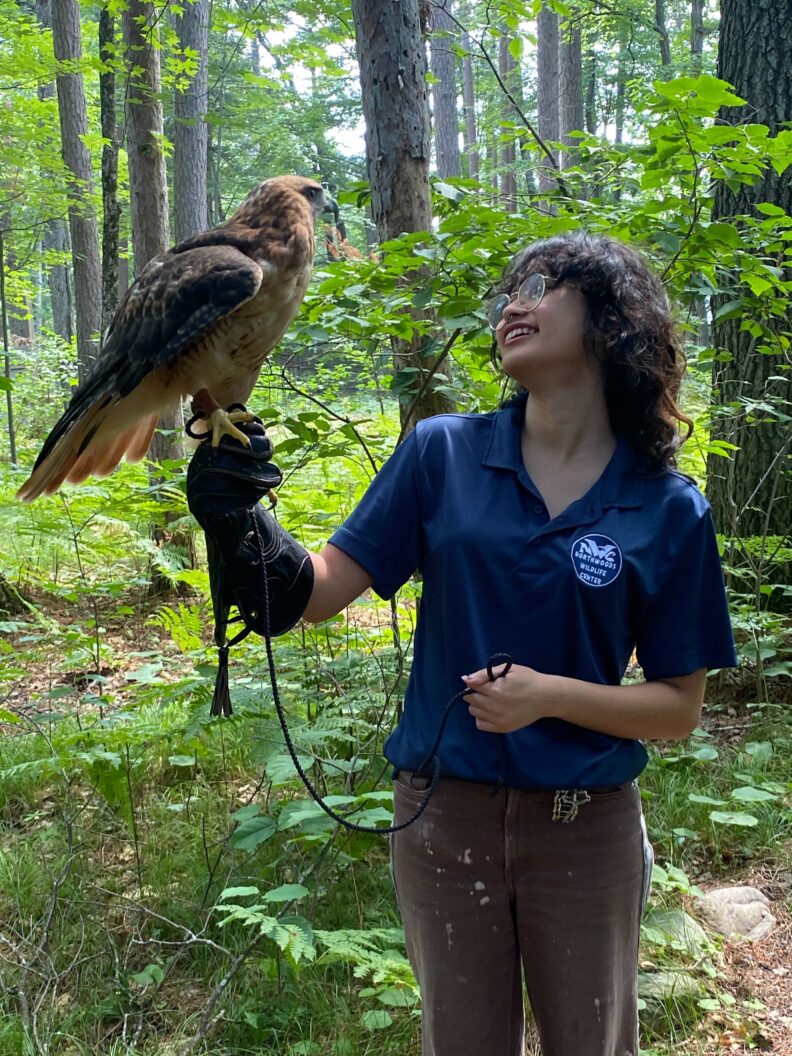
Via the Handshake portal, Laksmana found two internships in animal rehabilitation. One in Spokane called Cat Tales Wildlife Center, a big cat sanctuary, and another in Wisconsin called Northwoods Wildlife Center.
A six-hour plane ride to a state she knew almost nothing about, and Laksmana was in Minocqua, Wisconsin, working with about 60 distinct species of animals.
“I think I worked with around 300 patients in that summer, just in that four months,” she said.
During her internship she learned a lot of practical tools for wildlife rehabilitation and worked with lots of birds of prey and unique species. She said there was a bald eagle with a broken foot admitted as a patient at the clinic, and the bird was estimated to be 30 years old.
“She was banded back in the 90s … she was really cool to work with, she already had an established territory,” Laksmana said.
Bald eagles typically live 15-25 years in the wild, according to US Fish and Wildlife Service data (PDF). Laksmana got to see the elder eagle’s full rehabilitation and release after healing from a vehicle strike. The senior bird was transported to her suspected territory at a lake in northern Wisconsin. It must have been a robust habitat since the eagle survived to such an advanced age.
“Her little territory was a small island in the middle of the lake,” Laksmana said. “She was so great, she’s probably feasting right now.”
Laksmana said she felt anxious about leaving Washington for a state she knew nothing about. But she had already made the leap to study in the US, hopping a couple of states over seemed easier than uprooting her whole life from her home country.
“I was a bit hesitant traveling further than Washington, but again I’m really glad I took the risk, you know, I got to meet new people that I’m still friends with up to this day,” she said.
What’s Next
Laksmana wants to pursue a career in the US and has lined up a job at the Veterinary Teaching Hospital post-graduation, where she will spend more time working with domestic animals. She said she has made lasting relationships at WSU largely because she sought out opportunities to connect with international and domestic students at the International Center, and through her internships. She said she was able to express Indonesian culture at community events and tell fellow Cougs about her homeland.
“Being able to represent like my country, and you know, know about it beyond, like tourist destinations are really fun,” she said. “I get to not just connect with other international students, I get to facilitate that meeting between international students and also domestic.”